China Top 10 Lithium Battery Cell Manufacturers?
China has become a major force in the global lithium battery industry. Its manufacturers serve electric vehicles, energy storage systems, electric tools, and specialty transport. This guide examines China’s top 10 lithium battery cell manufacturers through practical and verifiable criteria.
The review considers production scale, cell chemistry, safety systems, energy density, quality control, and international supply capability. It also considers real-world performance, not only impressive factory announcements. CATL, BYD, EVE Energy, CALB, Gotion High-Tech, and other established producers have different strengths. Some focus on large automotive contracts. Others compete in commercial storage or smaller cylindrical formats. That difference matters.
A strong manufacturer should provide consistent cells, traceable materials, reliable testing, and clear technical documentation. Certifications and customer partnerships can support credibility, but they do not tell the entire story. Field performance, warranty support, and delivery stability deserve equal attention. Numbers can look excellent.
This ranking is not permanent. Capacity changes, technologies improve, and market conditions shift quickly. A company leading in 2024 may face stronger competition later. Some public information is also incomplete, especially regarding defect rates and long-term degradation. That limitation deserves honest recognition. Readers should verify current specifications before choosing a supplier. The following overview offers a practical starting point for comparing China’s leading lithium battery cells producers, while keeping technical evidence and responsible sourcing in focus.
What Are Lithium Battery Cells and Why Does China Lead the Market?
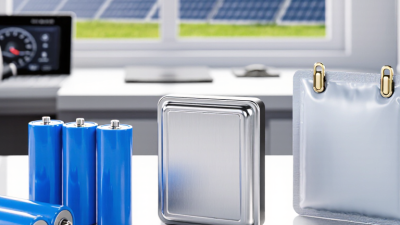
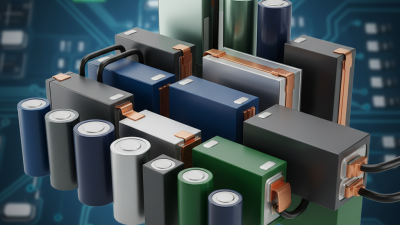
A lithium battery cell is the basic energy unit inside a battery pack. It stores electricity through chemical reactions between a positive electrode, a negative electrode, and an electrolyte. A separator keeps these layers apart while allowing ions to move. Common cell shapes include cylindrical, prismatic, and pouch designs. Each choice affects cooling, weight, safety, and production cost.
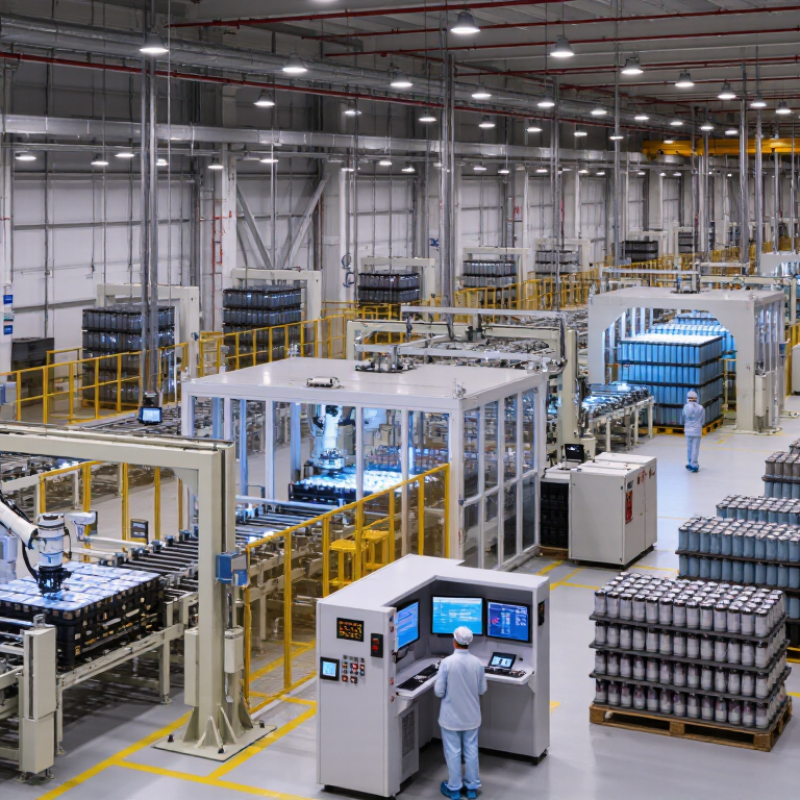
China leads this market because its supply chain is unusually complete. Refined minerals, electrode materials, separators, cell assembly, testing equipment, and recycling services operate close together. This reduces transport time and supports faster manufacturing adjustments. Large factories can produce millions of cells, while automated systems check thickness, voltage, resistance, and leakage. In practice, small defects matter. A tiny coating variation can reduce capacity or shorten service life.
Technical experience also explains China’s position. Engineers continuously improve electrode formulas, thermal control, charging performance, and quality inspection. Government investment and strong industrial infrastructure have supported this growth, but the picture is not perfect. Scale can lower costs, yet it may also create pressure to expand before every process is fully mature. Cell quality still depends on materials, factory discipline, testing standards, and storage conditions. Buyers should examine verified test data, production traceability, safety certifications, and long-term field results rather than relying on production volume alone.
How Are China’s Top 10 Lithium Battery Cell Manufacturers Ranked?
China’s top ten lithium battery cell manufacturers should be ranked by evidence, not factory size alone. The IEA reported that China held about 80% of global battery cell manufacturing capacity in 2023. This scale creates strong production advantages. However, capacity does not always equal quality.
A practical ranking model can assign 35% to annual shipment volume, 25% to cell consistency, 20% to manufacturing capacity, and 20% to technology and customer diversity. SNE Research recorded global electric vehicle battery deployments of 705.5 GWh in 2023, a 40.6% annual increase. Manufacturers serving this expanding market deserve greater attention. Yet shipment data may favor large-volume producers. That is one weakness.
Quality needs measurable proof. Analysts should examine energy density, cycle life, defect rates, safety records, and warranty performance. Benchmark Mineral Intelligence also tracks lithium, cathode, and cell supply chains, helping reviewers test whether reported expansion is commercially realistic. A factory with advanced equipment may still face weak utilization. Numbers can look impressive.
The top ten should therefore receive scores from audited production data, independent testing, patent activity, and delivery reliability. Regional supply coverage also matters, especially for electric vehicles and energy storage systems. Public reports sometimes use different definitions for capacity and shipments, which can distort rankings. Careful readers should compare reporting periods, product categories, and usable output before accepting any list.
Who Are the Major Lithium Battery Cell Manufacturers in China?
China’s major lithium battery cell manufacturers are best understood through capability, not publicity. A neat top-ten ranking is tempting, but it can mislead buyers. The leading producers usually include large integrated groups, power-cell specialists, energy-storage suppliers, and manufacturers focused on commercial vehicles. Some operate multi-gigawatt factories with automated coating, calendaring, stacking, and formation lines. Others serve smaller industrial orders with more flexible production schedules. Their products commonly use lithium iron phosphate or nickel-rich chemistries, depending on safety, range, weight, and cost requirements.
Reliable evaluation requires more than checking annual capacity. Ask for cell-level traceability, production dates, thermal-abuse test results, and independent certification records. Factory audits should examine moisture control, electrode uniformity, welding quality, and aging-room procedures. A serious supplier can explain how it controls capacity variation between cells. It should also provide realistic cycle-life data at defined temperatures, charging rates, and depth of discharge. Numbers without test conditions are weak evidence. Very large output does not automatically mean consistent quality. This is where buyers sometimes misjudge the market.
China’s strongest manufacturers also invest in recycling systems, digital inspection, and long-term engineering support. Their experience appears in stable voltage curves, clean terminals, and fewer rejected batches. Still, technical documents may hide practical limitations. Sample performance can differ from mass production. Independent testing remains necessary before signing a large contract. The safest choice is often the manufacturer that communicates limitations clearly, not the one promising everything.
China Top 10 Lithium Battery Cell Manufacturers? - Who Are the Major Lithium Battery Cell Manufacturers in China?
Technology overview, not a company ranking. Company and brand names are intentionally omitted; energy-density figures are indicative cell-level ranges and vary by product and measurement method.
| No. |
Cell type and chemistry |
Typical nominal voltage |
Indicative cell energy density |
Common strengths |
Typical applications |
| 1 |
Prismatic LFP (lithium iron phosphate) |
About 3.2 V |
About 120–200 Wh/kg |
Long cycle life and strong thermal stability; cobalt-free chemistry |
Electric vehicles, buses, and stationary storage |
| 2 |
Cylindrical LFP |
About 3.2 V |
About 120–180 Wh/kg |
Standardized form factor and robust mechanical construction |
Light electric vehicles, tools, and battery packs |
| 3 |
Pouch LFP |
About 3.2 V |
About 130–190 Wh/kg |
Flexible cell dimensions and efficient use of pack space |
Electric vehicles and custom battery systems |
| 4 |
Prismatic NMC (nickel manganese cobalt oxide) |
About 3.6–3.7 V |
About 180–260 Wh/kg |
Higher energy density than many LFP cells |
Electric vehicles and applications prioritizing range |
| 5 |
Cylindrical NMC |
About 3.6–3.7 V |
About 200–280 Wh/kg |
Established cylindrical formats and high energy density |
Vehicles, power tools, and portable equipment |
| 6 |
Pouch NMC |
About 3.6–3.7 V |
About 200–280 Wh/kg |
Lightweight packaging and adaptable cell dimensions |
Electric vehicles and space-constrained battery packs |
| 7 |
Pouch LCO (lithium cobalt oxide) |
About 3.6–3.7 V |
About 150–240 Wh/kg |
High energy density in compact cell formats |
Phones, laptops, and other consumer electronics |
| 8 |
LTO (lithium titanate oxide) |
About 2.3–2.4 V |
About 60–100 Wh/kg |
Fast charging and long cycle life; lower energy density |
Buses, industrial equipment, and high-use storage |
| 9 |
LMFP (lithium manganese iron phosphate) |
Typically above LFP; product-dependent |
Product-dependent; generally positioned above LFP |
Phosphate-based chemistry designed to improve energy density over LFP |
Developing electric-vehicle and battery-pack applications |
| 10 |
Sodium-ion |
Typically about 3.0–3.2 V; chemistry-dependent |
Product-dependent; typically below mainstream lithium-ion cells |
Uses sodium-based chemistry and diversifies battery-material options |
Developing applications in stationary storage and selected vehicles |
What Technologies and Applications Do These Manufacturers Offer?
China’s top ten lithium battery cell manufacturers serve different technical and application needs. Their portfolios commonly include lithium iron phosphate, nickel-manganese-cobalt, and lithium titanate chemistries. Each choice affects safety, energy density, charging speed, cost, and service life. LFP cells suit electric buses, delivery vans, and stationary energy storage. NMC cells often support passenger vehicles requiring longer driving range. Lithium titanate remains useful where rapid charging and low-temperature performance matter.
Cell formats also vary. Prismatic cells offer efficient space use and simpler pack assembly. Cylindrical cells can provide consistent production quality and strong mechanical stability. Pouch cells reduce weight, but they require careful protection against swelling and moisture. Manufacturers increasingly combine these cells with advanced battery management systems, thermal sensors, liquid cooling, and intelligent fault detection. Some production lines also explore dry-electrode processing to reduce energy use, although commercial results can differ.
Applications extend beyond vehicles. Large battery systems store solar power during daylight and release it after sunset. Smaller cells power medical equipment, warehouse vehicles, communication systems, and cordless tools. In practical projects, temperature control often matters more than advertised capacity. A high-energy cell may disappoint in a poorly designed pack. Rankings can also change quickly because factories expand, technologies mature, and quality control varies between production batches. This makes independent testing, traceable specifications, and field data essential when comparing suppliers.
China’s Lithium Battery Cell Manufacturers: Technologies and Applications
Typical cell-level specific energy ranges by lithium-ion chemistry (Wh/kg). These technology benchmarks are not company-specific figures or a manufacturer ranking; actual values vary by cell design and test method.
Common applications: LFP is widely used in electric vehicles and stationary storage; NMC and NCA are common in electric vehicles; LCO is used mainly in consumer electronics; LTO is suited to applications prioritizing fast charging and long cycle life, such as some buses and energy-storage systems.
How Should Buyers Compare China’s Lithium Battery Cell Suppliers?
When buyers compare China’s leading lithium battery cell suppliers, price is rarely the safest starting point. Ask for the cell format, chemistry, rated capacity, voltage range, and test temperature. A 280 Ah cell tested at 25°C may perform differently in a hot enclosure. Request dated test reports, not only a sales spreadsheet. In production, small differences in moisture control can affect swelling, resistance, and usable life. That detail matters.
Evaluate manufacturing evidence, including incoming-material inspection, electrode coating records, formation data, and end-of-line checks. A dependable supplier should trace each cell batch to equipment, operators, and inspection results. Ask how rejected cells are isolated and documented. Review independent laboratory results when claims seem unusually strong. Capacity is not enough. Compare cycle-life conditions, storage limits, warranty terms, and replacement procedures under a written agreement. Suppliers with stable processes usually explain failures clearly, even when the answer is uncomfortable.
Samples should undergo your own verification before volume orders. Measure capacity, DC internal resistance, dimensions, terminal strength, and performance after storage. Check packaging too; damaged terminals can create delays before assembly begins. Ask for production lead times, minimum order quantities, payment milestones, and shipping documents. Confirm compliance with the destination market’s safety and transport requirements. A video factory tour helps, but it is not proof. Polished samples can hide inconsistent batch control. Build a small pilot order, record every deviation, and make acceptance criteria measurable.