Why Choose Lithium Products for Your Energy Storage Needs?
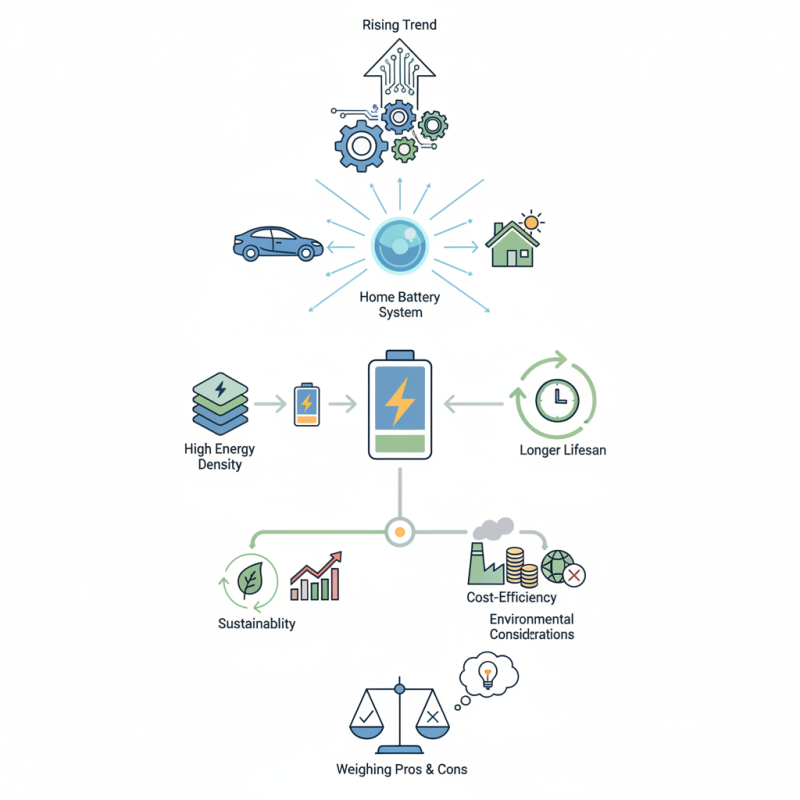
In recent years, lithium products have emerged as leading options for energy storage. Their popularity is evident in numerous applications, from electric vehicles to home battery systems. This rising trend is not without reasons; lithium products offer distinct advantages over traditional storage solutions.
One key feature of lithium products is their high energy density. They can store more energy in a smaller space, making them ideal for compact settings. Additionally, lithium batteries have a longer lifespan compared to other options. However, not all lithium products are created equal. Some may have environmental considerations that demand attention.
Choosing lithium products also means considering costs and efficiency. While the initial investment may be higher, the long-term benefits often outweigh the upfront expenses. With a growing focus on sustainability, many users find themselves weighing the pros and cons of lithium. It's essential to reflect on these factors when making energy storage decisions.
Benefits of Lithium Energy Storage Solutions
Lithium energy storage solutions have become increasingly popular due to their numerous advantages. For instance, they provide a high energy density compared to other technologies. Reports indicate that lithium batteries have energy densities up to 250 Wh/kg. This makes them ideal for various applications, from electric vehicles to renewable energy systems. The compact size allows for more efficient use of space.
Another significant benefit is the lifespan of lithium batteries. They typically last for over 2,500 charge cycles. This longevity reduces the need for frequent replacements. As a result, users can save on costs over time. Despite their higher initial investment, the long-term savings are compelling. Still, it's worth noting that the production process involves environmental concerns. Mining lithium can lead to habitat destruction. However, advances in recycling technology are promising. They aim to address these environmental impacts.
Lithium-ion solutions also offer fast charging capabilities. Many lithium batteries can recharge in under one hour. This efficiency supports the growing demand for quick turnaround times in today’s fast-paced world. However, the safety of lithium products isn’t without scrutiny. Cases of overheating have raised questions. Ongoing research is critical to enhance safety measures. Overall, choosing lithium products can bring significant benefits, but awareness of their challenges is vital.
Why Choose Lithium Products for Your Energy Storage Needs? - Benefits of Lithium Energy Storage Solutions
| Feature |
Lithium Energy Storage |
Traditional Energy Storage |
| Energy Density |
High |
Low |
| Cycle Life |
2000-5000 cycles |
500-1000 cycles |
| Charge Time |
Quick (1-2 hours) |
Slower (5-10 hours) |
| Weight |
Lightweight |
Heavy |
| Efficiency |
> 90% |
< 80% |
| Environmental Impact |
Low (recyclable) |
Higher |
Comparison of Lithium and Traditional Energy Storage Technologies
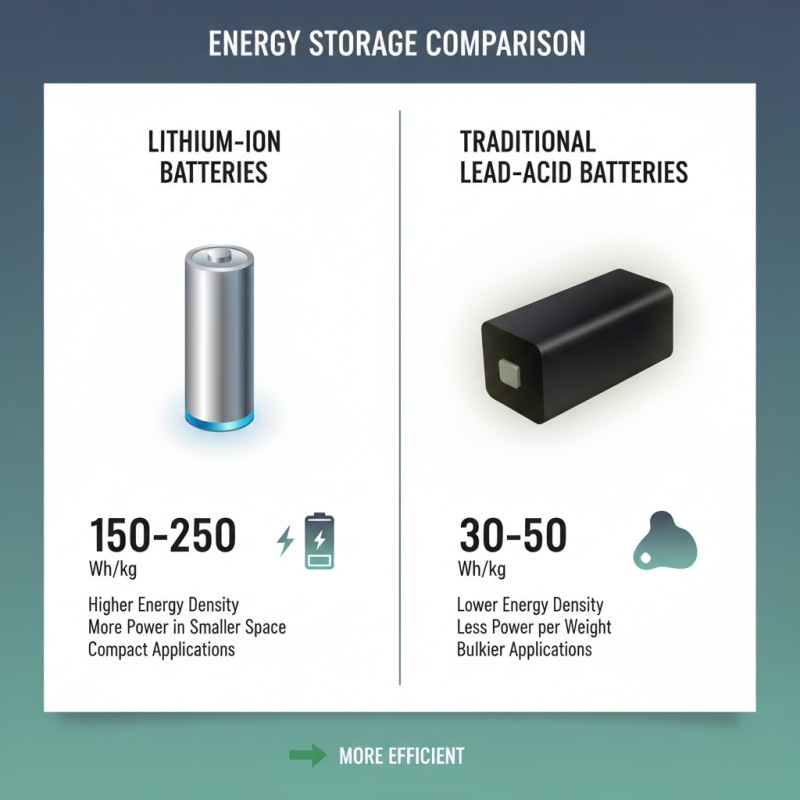
When comparing lithium and traditional energy storage technologies, several notable differences arise. Lithium-ion batteries can store more energy in a smaller volume. For instance, they boast a specific energy of 150-250 Wh/kg, while lead-acid batteries only offer about 30-50 Wh/kg. This means lithium batteries are more efficient for space-limited applications.
Another key factor is lifespan. Lithium batteries typically last for 8-15 years. They endure more charge cycles, often exceeding 3,000 cycles, compared to traditional options that usually last around 500-1,000 cycles. In the energy storage marketplace, this longevity translates to reduced replacement costs over time. However, the initial investment can be higher.
Safety is another critical concern. Lithium-ion technology carries risks, such as overheating and fire hazards, if not managed properly. Despite advances in safety measures, it's important to remain cautious. For instance, while modern batteries have built-in management systems, failures still occur occasionally. Therefore, users should be aware of the risks involved, especially in high-demand applications.
Applications of Lithium Products in Various Industries
Lithium products have carved their niche in various industries due to their efficiency and versatility. In renewable energy, they play a crucial role in powering solar and wind systems. Lithium batteries store energy generated from these sources. When the sun sets or the wind calms, stored energy can be used. However, the challenge lies in creating sustainable methods for battery disposal.
In the automotive sector, lithium-ion batteries are fundamental in electric vehicles. They enable longer driving ranges while maintaining lighter weight. This leads to improved performance. However, scaling production can be problematic. The demand for lithium is growing. This has raised concerns about environmental impacts and resource management. Balancing growth with sustainability is essential.
The technology industry also benefits from lithium products. From smartphones to laptops, portable devices rely on them for power. Their compact size and efficiency are advantageous. Yet, innovation must address issues related to battery lifespan and recycling. The need for a circular economy is more pressing than ever. Not addressing these concerns could lead to consumer trust issues.
Applications of Lithium Products in Various Industries
This bar chart illustrates the market share of lithium products across various industries, highlighting their significant applications in electric vehicles and renewable energy storage, among others.
Environmental Impact of Lithium Extraction and Usage
Lithium products are gaining popularity for energy storage. However, the environmental impact of lithium extraction raises concerns. Mining activities can disrupt ecosystems. Water usage in lithium extraction is significant and may lead to scarcity in local communities. The process can contaminate surrounding soil and water sources, posing risks to wildlife.
Moreover, while lithium batteries help reduce carbon emissions in the long run, their production involves carbon-intensive processes. The demand for lithium has surged, affecting both the supply chain and local populations. In regions where lithium is extracted, communities often face displacement or loss of livelihoods. These issues beg for a reflection on sustainability practices.
Transitioning to renewable energy is vital, yet we must not overlook the environmental costs. Balancing the benefits and drawbacks of lithium use is crucial. It prompts discussions about responsible sourcing and recycling methods. Without proper planning, the unintended consequences might overshadow the potential advantages of lithium products.
Future Trends in Lithium Energy Storage Innovations
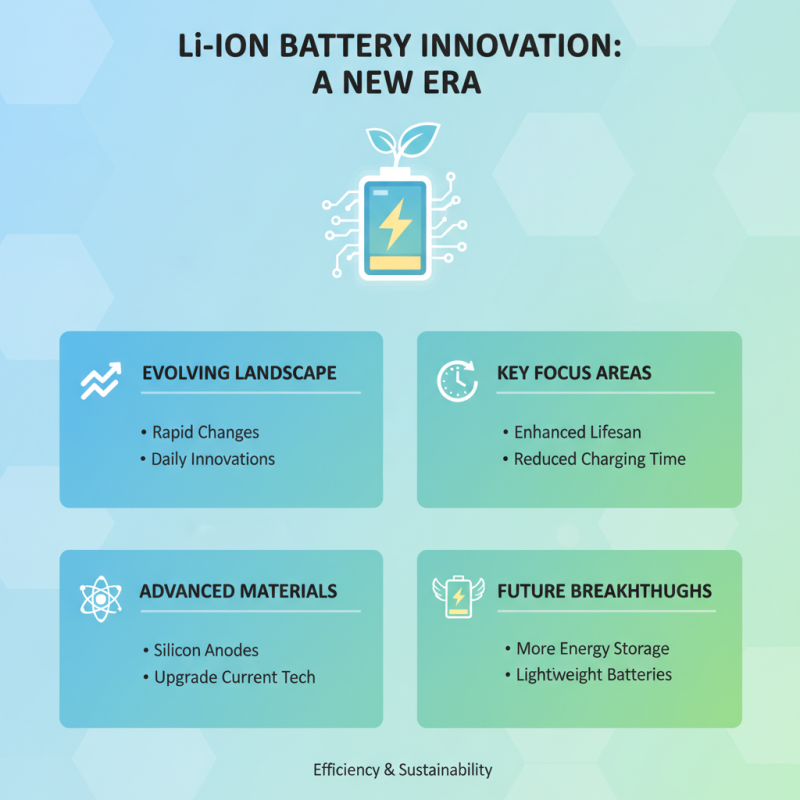
The landscape of lithium energy storage is evolving rapidly. Innovations are emerging every day, aiming to improve efficiency and sustainability. New developments focus on enhancing battery lifespan and reducing charging times. Researchers are exploring advanced materials, like silicon anodes, which could significantly upgrade current lithium-ion technology. These breakthroughs may allow batteries to store more energy while remaining lightweight.
On the horizon, solid-state batteries show great promise. They have the potential to offer higher energy density and increased safety. However, manufacturing at scale remains a challenge. There are concerns about material costs and production methods that could hinder progress. The race is on to refine these technologies.
In the realm of recycling, innovations are also brewing. More efficient recycling processes could lower the environmental impact of lithium extraction. However, achieving a closed-loop system is still a daunting task. Balancing efficiency with sustainability will demand collective effort and creative solutions. The future of lithium energy storage is bright, but it requires continuous reflection and adaptation.